

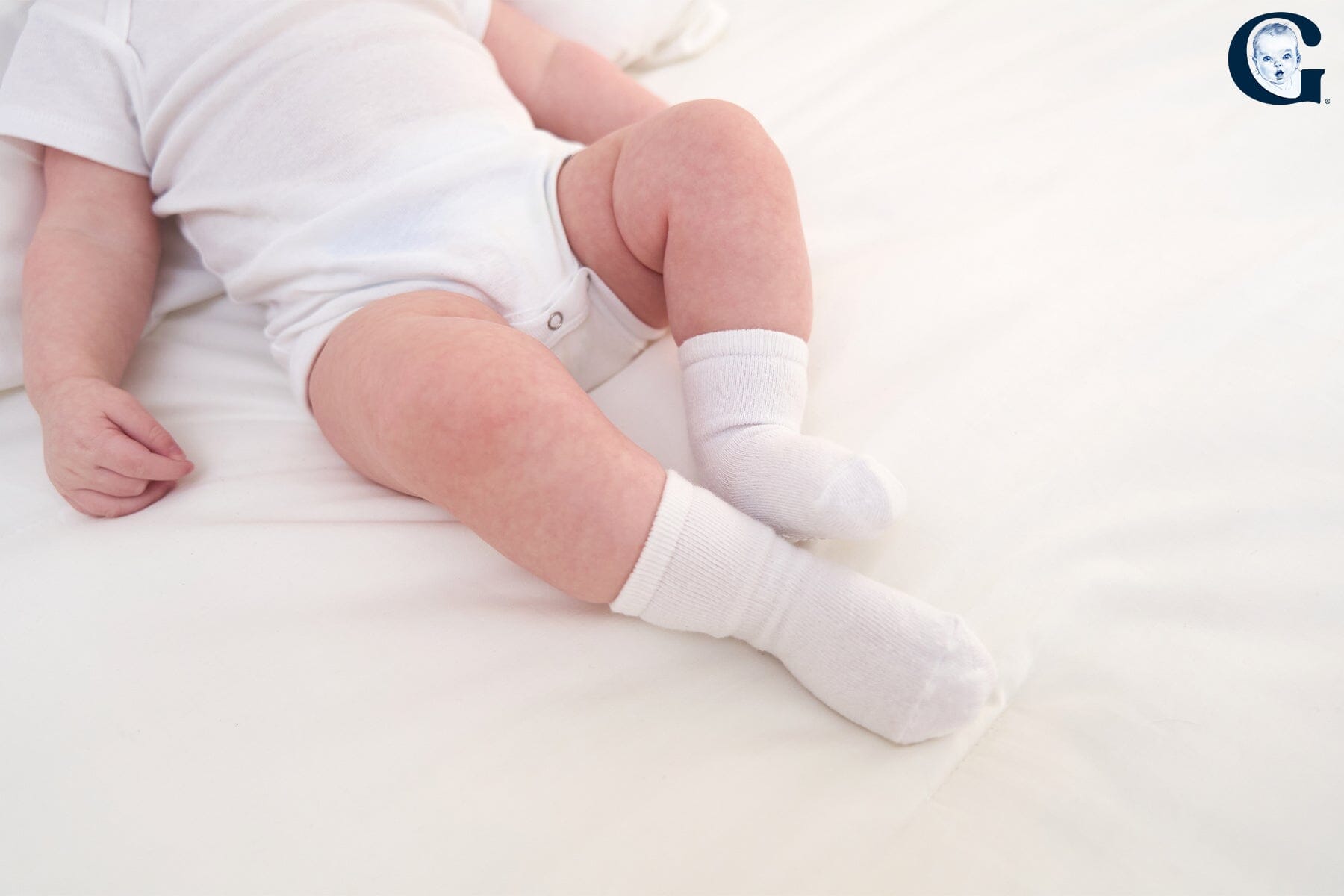
Every parent knows the frustration. You carefully dress your newborn in an adorable outfit, complete with tiny socks, only to discover five minutes later that one (or both) has mysteriously vanished. You search the car seat, check the stroller, and somehow find a lone sock in the most random place possible. If you've ever wondered whether there's some secret to finding newborn socks that stay on, you're not alone. This universal parenting struggle has a solution, and it starts with knowing exactly what features to look for.
Why Newborn Socks Are So Difficult
Before we dive into solutions, it's helpful to understand why those tiny socks seem to have a mind of their own. Newborn feet are uniquely shaped with very little definition between the ankle and the leg. There's minimal heel shape, virtually no arch, and the ankle is incredibly narrow compared to the chunky thigh above it. This means socks have very little to grip onto.
Add to this the fact that babies are constantly moving their legs, even when they appear to be sleeping peacefully. Those little kicks and stretches gradually work socks down and off their feet. The problem is compounded when socks are even slightly too large, as newborn sizing can vary significantly between brands.
The good news? Innovations in sock design have created solutions specifically engineered to address these challenges. Stay-on technology and strategic construction features now make it possible to find newborn socks that truly remain in place through all that wiggling and kicking.
The Essential Features of Socks for Newborns That Stay On
Grip and Grip Placement
The single most important feature in the best newborn socks that stay on is a secure grip mechanism. Some brands have developed proprietary stay-on technology specifically designed to solve this problem. Wiggle Proof® socks, for example, use strategic grip placement that keeps socks secure through even the most active baby movements.
Look for socks with elastic around the ankle opening, but not just any elastic. The grip should be snug enough to hold the sock in place without being so tight that it leaves marks on your baby's delicate skin or restricts circulation. The best designs incorporate this grip seamlessly into the sock's construction so it doesn't feel bulky or uncomfortable.
Rolled cuff styles double the fabric at the ankle, creating extra grip without relying solely on tight elastic. This design can be particularly effective because it provides security while remaining gentle on sensitive newborn skin. The cuff should stay folded during wear and not roll down, which would defeat its purpose.
Pay attention to where the grip is located on the sock. Ankle grips work well, but some innovative designs feature gentle grips that extend slightly up the calf. These can be especially effective for particularly wiggly babies who manage to kick off everything you put on their feet.
Material Matters
The fabric composition plays a crucial role in whether socks stay put. Cotton blends with a small percentage of spandex or elastane offer the perfect combination of breathability, softness, and stretch. Pure cotton socks, while soft and natural, often lack the elasticity needed to grip a newborn's narrow ankle.
You'll typically find two main fabric types in quality baby socks: terry and jersey. Terry socks have a thicker, more textured construction that provides extra warmth and cushioning, making them ideal for cooler weather or outdoor wear. Jersey socks are lighter and smoother, perfect for everyday indoor wear or warmer months. Both can incorporate stay-on technology effectively, so your choice depends on the season and your baby's needs.

Look for socks that list their fabric content. A typical effective blend might be 75-80% cotton with 15-20% polyester and 3-5% spandex. The cotton provides breathability and comfort, the polyester adds durability, and the spandex gives that essential stretch and recovery that helps the sock maintain its shape and grip.
The knit structure also matters. A tighter knit generally holds its shape better and is less likely to stretch out after multiple wearings and washings. You can assess this by gently pulling on the fabric. It should stretch but then snap back to its original shape relatively quickly.
Size and Fit Considerations
Proper sizing is critical when shopping for newborn socks that stay on. Many parents instinctively buy larger sizes thinking their baby will grow into them, but this virtually guarantees the socks will slip off. Newborn socks should fit snugly from day one.
Most brands size their socks by age range (0-3 months, 3-6 months, etc.) or by shoe size. For true newborns, especially those under 8 pounds, look specifically for "preemie" or "0-1 month" sizes rather than the broader 0-3 month range. That two-month difference in sizing can make all the difference in whether the socks stay on.
Check the product description for actual measurements when possible. The sock opening should measure around 4-4.5 inches in circumference for a newborn, though this can vary. If you're shopping online and unsure about sizing, reading customer reviews can provide valuable insight into whether socks run large, small, or true to size.
Design Elements That Help
Beyond the basic construction, certain design elements can improve sock retention. Socks with a slight texture or ribbing on the inside can provide additional friction to keep them in place. Some advanced designs incorporate grip technology directly into the sock's construction rather than relying on a separate elastic band.
The overall length of the sock matters too. Crew-length socks that come up over the ankle typically stay on better than ankle socks simply because there's more surface area in contact with the leg. Bootie-style socks with a higher ankle cuff provide even more coverage and security, making them an excellent choice for newborns who are particularly skilled at kicking off their footwear.

Look for socks with a well-defined heel pocket. While newborns don't have much heel definition, a sock designed with a heel pocket will fit the foot's contours better than a tube sock design, making it less likely to rotate and slip off.
When to Use Alternatives
Sometimes the best solution to the sock problem is to skip separate socks altogether. Footed sleepers and pajamas keep little feet covered without any risk of losing footwear. This can be especially practical for nighttime, when you want one less thing to worry about during middle-of-the-night diaper changes.
For daytime wear, footed pants or leggings offer another alternative that keeps feet warm while looking cute under a onesie. These work particularly well during the transition seasons when the weather doesn't quite call for full pajamas but your baby's feet still need covering.

That said, having quality socks with proven stay-on features is still essential for many situations. When your baby is wearing non-footed pants or dresses, when you're layering for cold weather, or when you simply want to complete an outfit, the right socks make all the difference.
The Mitten Connection
If you're struggling with socks that won't stay on, you've probably also experienced the same issue with baby mittens. The solution is remarkably similar. Look for mittens with secure cuffs that feature the same grip elements we've discussed for socks. Some parents find that mittens that attach to sleeves or that come built into sleeper designs work best for babies who constantly pull their hand coverings off.
The principles that make socks stay on apply equally to other accessories like mittens and hats. Secure but gentle elastic, appropriate sizing, and quality construction all contribute to accessories that stay in place without causing discomfort.
How Many Socks Do You Really Need?
Given how easily newborn socks can disappear, it's wise to stock up. Most experts recommend having at least 10-12 pairs of newborn socks on hand. This might seem excessive, but consider that you'll be doing laundry frequently, socks will inevitably get lost (no matter how well they stay on), and you'll want backup pairs in the diaper bag, car, and anywhere else you might need them.
Multi-pack options are ideal for building your sock collection efficiently. Sets of 6, 8, or 12 pairs ensure you always have clean socks ready and eliminate the stress of constantly doing laundry.
When you're preparing your baby essentials, prioritize buying multiple pairs of the same brand and style once you find socks that work well. This not only ensures consistency but also means that when you inevitably end up with mismatched socks, they'll at least be similar enough that no one will notice.
Consider having socks in a few different weights. Lighter jersey socks work well for indoor wear and warmer weather, while thicker terry options are necessary for outdoor outings in cool weather. However, avoid overly thick socks that might be difficult to fit inside shoes or that could make your baby's feet sweaty and uncomfortable.
Care Instructions That Maintain Grip
Even the best newborn socks that stay on can lose their effectiveness if not cared for properly. Always wash baby socks in a mesh laundry bag to prevent them from getting lost in the wash or stuck to other clothing. This simple step can save you from constantly buying replacement socks.
Avoid using fabric softener on baby socks, as it can coat the fibers and reduce the elastic's effectiveness. The softener residue can also make the socks slightly slippery, working against that grip you need. Instead, use a gentle, baby-safe detergent and skip the softener entirely.
Tumble dry on low heat or air dry to preserve the elastic. High heat can break down elastic fibers over time, causing socks to lose their stretch and grip. If you notice socks becoming loose after several washes, it might be time to replace them rather than constantly pulling them back up throughout the day.
Testing New Socks
When you first receive new socks, test them before cutting off all the tags or committing to a large purchase. Put them on your baby and observe how they perform during a typical active period. Do they stay up during tummy time? Do they survive a diaper change? Can your baby kick freely without immediately launching the socks across the room?

If you're shopping in person, you can do a basic stretch test. Gently stretch the sock opening and observe how quickly it returns to its original shape. If it remains stretched out, those socks probably won't maintain their grip throughout the day. Quality socks should have excellent shape recovery.
Pay attention to how the socks feel. The ankle band should be snug but shouldn't leave deep marks on your baby's skin. A slight indentation is normal and shows the sock is doing its job, but red marks or indentations that don't fade quickly after removing the sock indicate the elastic is too tight.
Special Considerations for Preemies and Small Babies
If your baby was born prematurely or is particularly small, finding socks that fit properly can be even more challenging. Standard newborn sizes are often still too large for preemie babies. Don't hesitate to specifically seek out preemie-sized socks, which typically accommodate babies up to 6 pounds.
For these tiny babies, rolled cuff styles with ribbed construction can be particularly helpful because the cuff design provides extra grip on especially slim ankles while the ribbing allows the sock to gently conform to smaller dimensions. Some parents also find success with socks that have a gather or slight ruching at the ankle, which helps the sock adjust to smaller measurements without feeling loose.
The Reality of Sock Loss
Even with the perfect socks for newborns that stay on, you'll likely still lose a few. It's practically a law of parenting. The best defense is preparation. Buy extra pairs, create a designated sock drawer, and make peace with the fact that some socks will simply vanish into whatever mysterious dimension consumes single socks and hair ties.
When you find a brand and style that works, stick with it. Note the specific model name or number so you can easily reorder when needed. Some parents even take photos of the packaging to remember exactly which socks were the winners.
Consider keeping a small stash of emergency socks in your diaper bag, car, and any other place you frequently visit with your baby. This way, when a sock inevitably disappears during an outing, you have an immediate backup rather than bare baby feet.
Making Your Choice
The quest for newborn socks that stay on doesn't have to be overwhelming. Focus on the key features: proprietary stay-on technology or secure grip mechanisms, appropriate fabric blends with stretch, correct sizing, and quality construction. Look for specific design elements like rolled cuffs, bootie-style coverage, or crew lengths that provide more ankle contact.
Consider investing in multi-packs once you find a style that works. Having 8 or 12 pairs of the same reliable socks eliminates daily frustration and ensures you always have clean options ready. Choose between terry construction for warmth and jersey for lighter wear, or keep both on hand for different seasons and situations.
Remember that what works for one baby might not work for another. Some babies have particularly slim ankles while others have chunkier legs. Don't be discouraged if the first socks you try aren't perfect. With a little trial and error and attention to the features we've discussed, you'll find the socks that work for your baby's unique feet.
Ultimately, the best newborn socks that stay on are the ones that keep your baby comfortable while staying securely in place. They should be soft enough for sensitive skin, stretchy enough to accommodate growth, and constructed well enough to survive multiple wash cycles. When you find that perfect pair, you'll wonder why you ever struggled with disappearing socks in the first place.


